NoTraffic adaptive signal technology
NoTraffic adaptive signal technology responds to real-time traffic conditions, adjusting signal timing as traffic changes throughout the day, helping create a smoother, more efficient commute.
The technology also provides valuable traffic data and safety insights that can help the City better understand how intersections and corridors are operating and identify opportunities to improve traffic flow and safety.
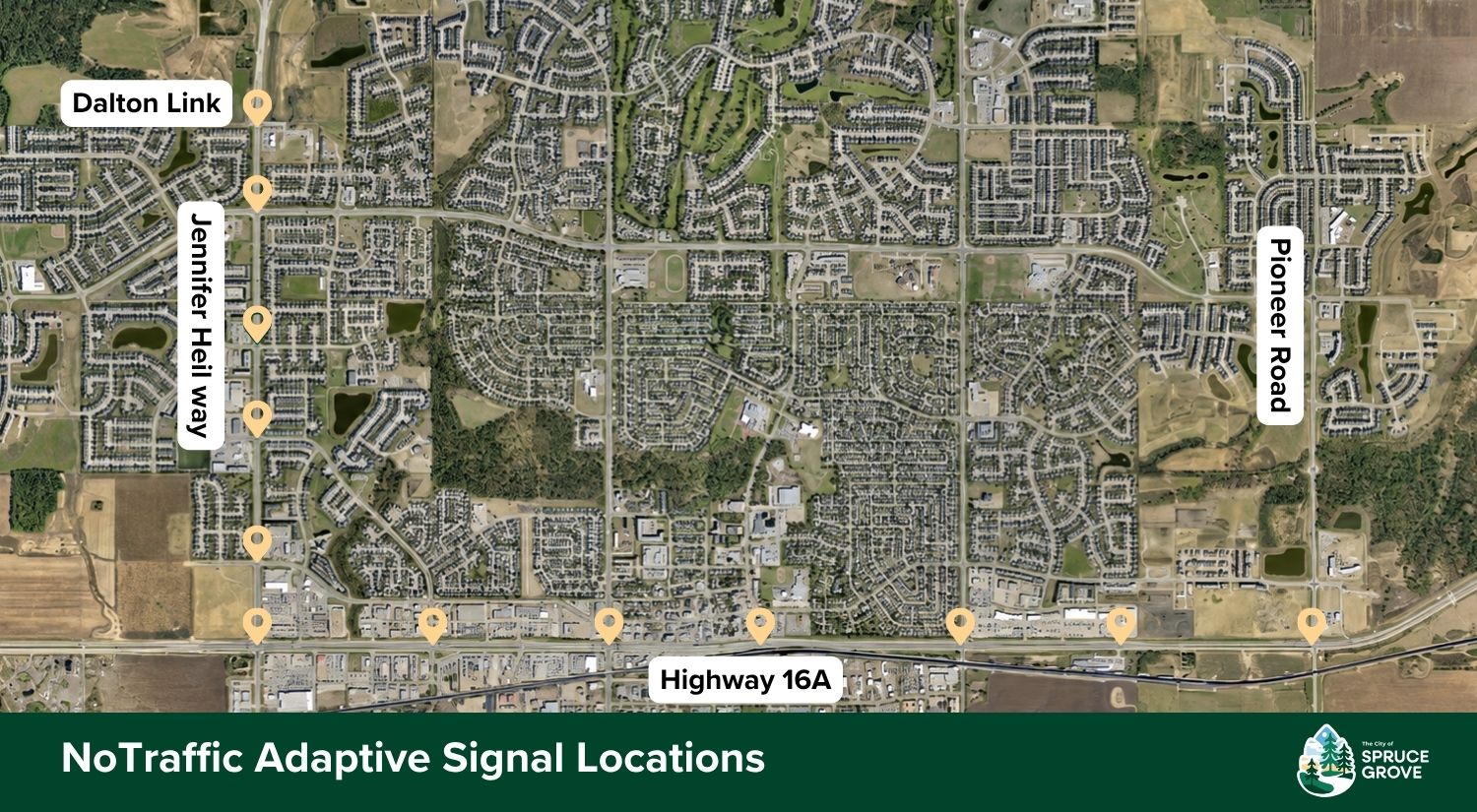
During the week of October 13, 2026, NoTraffic adaptive signal technology will be activated at 12 intersections in Spruce Grove, with adjustments made throughout the week to optimize traffic flow:
- From Jennifer Heil Way and Dalton Link, south to Highway 16A
- From Highway 16A and Jennifer Heil Way, east to Pioneer Road.
Frequently asked questions
Adaptive signal technology is a tool that allows traffic signals to respond to changing traffic conditions throughout the day. Rather than relying only on predetermined scheduled signal timing, NoTraffic uses real-time information about traffic movement to help adjust signal timing where needed.
In April 2025, the City launched a pilot project with NoTraffic at two intersections along Jennifer Heil Way (Grove Drive and Hawthorne Gate). The pilot tested the technology’s ability to detect and respond to traffic movements while integrating with the City’s existing traffic control infrastructure. This provided data and insights on traffic flow and volumes, corridor efficiency, and signal coordination.
Following the successful pilot project, the expansion of NoTraffic technology to 12 intersections along Highway 16A and Jennifer Heil Way was brought forward to Council and approved as part of the 2026 Spring Budget Adjustment, helping to support a safe and efficient transportation network as the city continues to grow.
On September 28, 2026, changes to traffic signals along Highway 16A were implemented, including changes to how left turns operate, to support the launch of NoTraffic. The expanded NoTraffic adaptive signal technology system was fully operational the week of October 13, 2026.
The technology monitors traffic conditions at intersections and can adjust signal timing based on current demand. This can help improve signal coordination, reduce unnecessary delays and support smoother traffic flow along the corridor.
Traffic conditions vary by time of day, traffic volumes and other factors, so the experience may not be the same every time you travel through the corridor. The system continuously responds to changing conditions, and the City will monitor its performance over time.
NoTraffic provides traffic-related data and analytics that help the City understand how intersections and corridors are operating. This includes information about vehicle types and volumes, as well as pedestrians and cyclists, traffic flow and signal performance. Vehicle speed data is used for signal optimization and is not stored or linked to identifying information. Tickets are not issued through this system.
This information helps the City monitor system performance, identify safety trends and optimize traffic signal operations and traffic flow.
Information collected through NoTraffic is used to understand traffic conditions, evaluate how intersections and corridors are operating and identify opportunities to improve traffic signal operations, traffic flow and safety.
NoTraffic does not collect personal information, identify individual drivers or read licence plates. The technology collects information about vehicle types and volumes, including motorcycles, cars, trucks and buses, as well as pedestrians and cyclists. This information is used to optimize traffic signal operations and support traffic flow and safety.
NoTraffic does not issue traffic tickets or automatically enforce traffic laws. The technology provides the City with information about traffic patterns and safety trends, including trends related to red-light running. This information can help identify locations where additional safety measures may be beneficial and supports proactive engineering and traffic safety efforts.
The system can also respond to traffic conditions by adjusting signal timing and clearance to help improve safety at intersections.
NoTraffic uses technology, including artificial intelligence, to analyze traffic conditions and help traffic signals respond to changing conditions in real time. The technology uses information about vehicle types and volumes, as well as pedestrians and cyclists. It does not collect personal information, identify individual drivers or read licence plates.
The City remains responsible for how the system is used and will continue to monitor its performance.
The technology can provide information about traffic movements and patterns that helps the City identify potential safety concerns and better understand how intersections are operating.
That information can help identify locations where additional safety measures may be beneficial and support the City’s proactive traffic safety efforts.
Yes. The City will continue to monitor the technology and traffic conditions to understand how NoTraffic is performing and identify opportunities for further improvements.