Stormwater Management
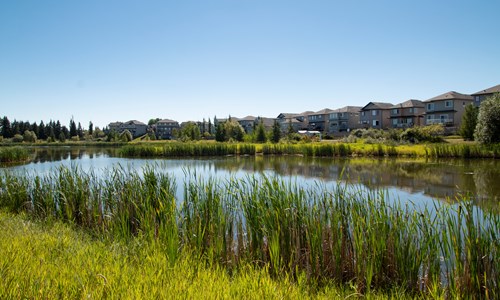
Did you know that the “ponds” in Spruce Grove neighbourhoods are actually Stormwater Management Facilities (SWMF) and play an important role when it comes to our water quality?
In natural, undeveloped areas, stormwater is absorbed by plants and soil, or naturally flows back into ponds and streams. However, in urban centres, hard surfaces like sidewalks, roads and rooftops prevent stormwater from soaking into the ground.
When rain falls or snow melts, water flows over these surfaces, collecting pollutants along the way. This runoff enters the City's stormwater system through catch basins and eventually reaches stormwater management facilities. Unlike wastewater from household sinks, toilets and showers, stormwater isn't sent to a wastewater treatment plant.
Here’s how stormwater management facilities work:
- What may appear to be a simple community pond actually collects rain, snowmelt, and other contaminants such as oils and road salts that enter the storm sewer system.
- From there, the runoff flows through the stormwater facility, allowing any additional sediment to settle at the bottom.
- Cleaner water is gradually released from the facility through outlet structures and continues to flow through the local watershed.
As it is important that the water being released back into the system meets specific quality standards, the City has a robust plan for stormwater management.
To learn about where SWMF's are located, you can view our most recent Storm Water Map.
Caring for our stormwater system
The City's Municipal Stormwater Utility Bylaw C-1451-26, Stormwater System Maintenance Policy CP-1065-26 and Turf Maintenance Policy CP-1070-26 guide how Spruce Grove's stormwater system and surrounding areas are managed, maintained and protected. Together, they outline responsibilities and maintenance practices that support the safe operation of the system, protect water quality and preserve naturalized areas.
Benefits
Stormwater management facilities, along with the natural habitat surrounding them, provide many benefits:
- Reduces risk of flooding and property damage
- Protects water quality by filtering the water and removing sediment and other materials
- Provides a habitat for wildlife
- Increases biodiversity
Naturalization
The naturalization of stormwater management facilities means that the designated areas surrounding the stormwater facilities are maintained in a more natural state. This includes the growth of wetland plants, shrubs, trees and grasses that are intentionally not landscaped or mowed. Established vegetation is essential to helping stormwater facilities function properly while supporting water quality and local ecosystem.
Residents can help protect these areas by leaving vegetation undisturbed and refraining from mowing or removing plants, planting trees or creating private access through stormwater facility lands.
The City's Turf Maintenance Policy outlines maintenance practices for naturalized areas around stormwater facilities. The Tree Protection Bylaw also addresses unauthorized cutting or removal of vegetation.
Water quality and algae
During the summer months, algae may appear on the water’s surface due to several factors, including runoff from nearby properties containing phosphorus and nitrogen from fertilizers, pet and yard waste (clippings/potted plants), and warmer weather conditions.
Under the City's Municipal Stormwater Utility Bylaw, prohibited materials must not be released into the stormwater system, including stormwater management facilities.
It is worth noting that algae plays an important role in the biological water treatment process and some algae in a stormwater management facility is beneficial. The City monitors, maintains and manages the water in SWMFs to ensure it is safe for discharge into the North Saskatchewan River watershed.
Naturalized vegetation surrounding stormwater facilities also helps maintain a healthy ecosystem by filtering runoff, supporting biodiversity and reducing the amount of pollutants entering the water.
Aeration
The City uses at some SWMFs to improve water quality, reduce algae and control odour. Over time, sediment can build up at the bottom of a stormwater facility creating a muddy foundation that reduces oxygen levels and disrupts the ecosystem. Aeration systems can help circulate facility water to increase oxygen levels, promote faster organic decomposition and reduce sediment buildup.
Safety
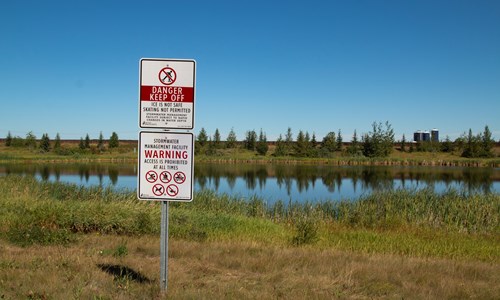
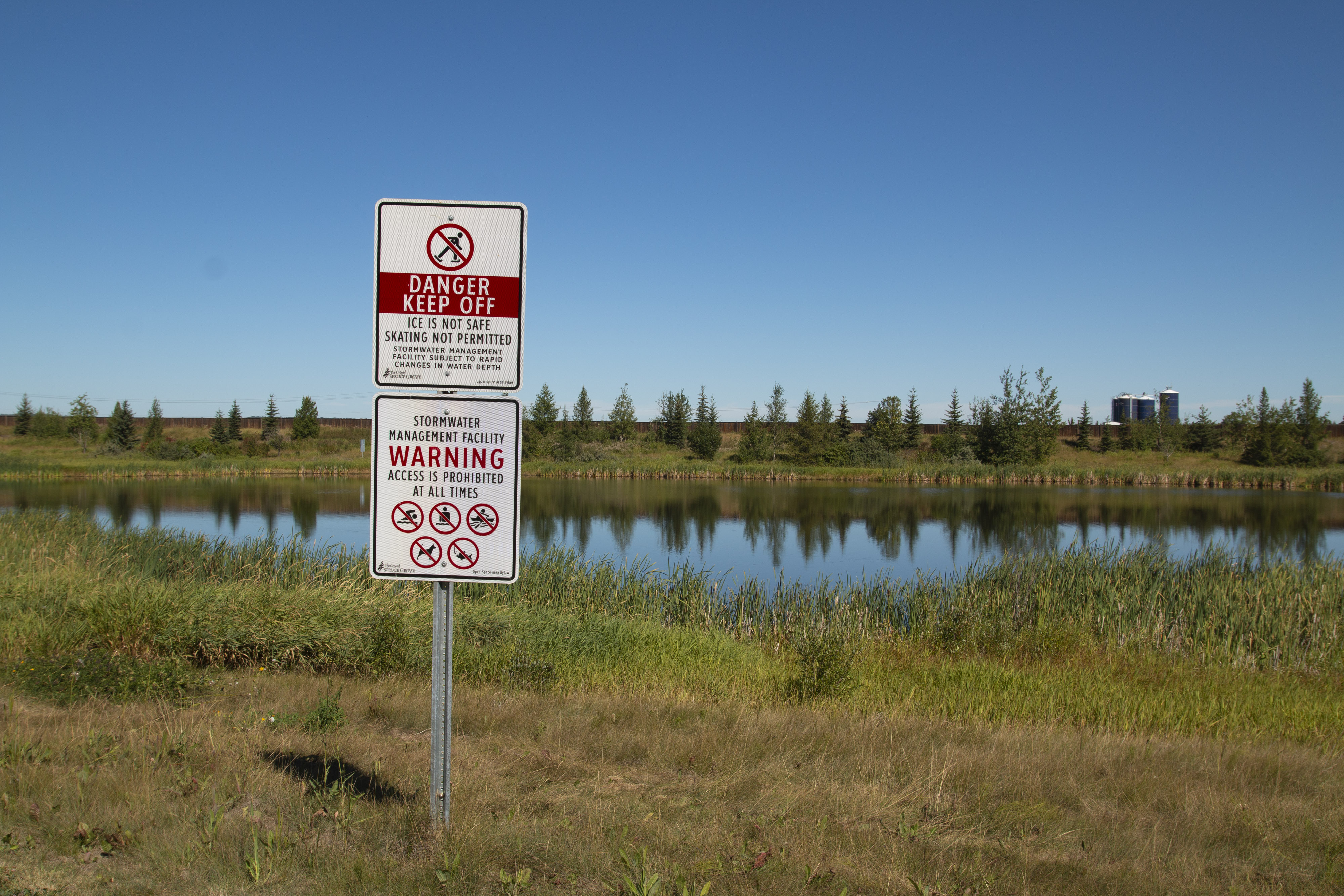
Stormwater management facilities might look like a great place to skate or walk, but they are not safe for people or pets. Learn more about stormwater safety.
Help protect our stormwater system
Everyday activities can affect stormwater quality. Learn what you can do at home and in your neighbourhood to help protect Spruce Grove's stormwater system.
Did you know?
- The City operates and maintains approximately 53 stormwater management facilities (SWMF), including 46 wet facilities and 7 dry facilities.
- SWMFs are designed to release stormwater at rates similar to pre-development rates, protecting the downstream storm system from flooding and erosion.
- SWMFs are designed to temporarily accommodate
- Land developers and home builders are required to follow City standards and guidelines to help manage surface runoff, erosion and sedimentation.
- Vegetation around stormwater management facilities helps to filter surface runoff before it enters the facility.